The aluminum extrusion process is the shaping of the material by pushing heated aluminum under pressure through a die with the desired cross-section. Thanks to this process, it is possible to produce aluminum extrusion profiles in different shapes. The aluminum extrusion process, which is suitable for mass production, is carried out with various stages.
Aluminum is a durable material that can be easily shaped in terms of its properties. However, preheating the aluminum billets in the extrusion process allows the aluminum to take shape more easily. Since the shape of aluminum profiles is variable according to the area of use, different forms of aluminum extrusion dies are preferred in the extrusion process.
Features of Aluminum Extrusion Products
Extrusion process is carried out by aluminum extrusion companies. Aluminum profiles produced with extrusion dies offer the properties of aluminum, which is its raw material.
- Aluminum profiles are much lighter when compared to profiles made of steel and iron materials.
- It is resistant to adverse weather conditions such as rain, snow and gases.
- Since aluminum is a good conductor, profiles produced by extrusion are good conductors too.
- Aluminum profiles, which have an elastic structure, have a structure that is resistant to sudden impacts.
- The usage area of aluminum extrusion profiles is extremely wide. It is preferred in many different sectors from energy to construction and transportation.
- Aluminum extrusion profiles, produced with extrusion dies in different forms, stand out with their wide product range.
- Aluminum extrusion products have an attractive appearance for exterior architecture. For this reason, it is often preferred in architectural designs.
- It has a corrosion resistant structure.
Usage Areas of Aluminum Extrusion Products
Aluminum extrusion products are preferred in many different sectors due to the advantages they provide. Heat-resistant aluminum extrusion products are also used in the field of energy because they are good conductors. We can list the usage areas of aluminum products produced by the extrusion method as follows:
- Transportation vehicles such as automobiles, ships, trains, subways, cars, airplanes,
- Facade cladding systems of buildings, windows, doors,
- Electrical industry,
- Machinery and equipment manufacturing,
- Chemical industry,
- Food industry,
- Spacecraft.
Aluminum extrusion profiles have a wide range of usage areas. With its durable structure, it is preferred by every sector and has a long lifespan.
The Extrusion Process Step by Step
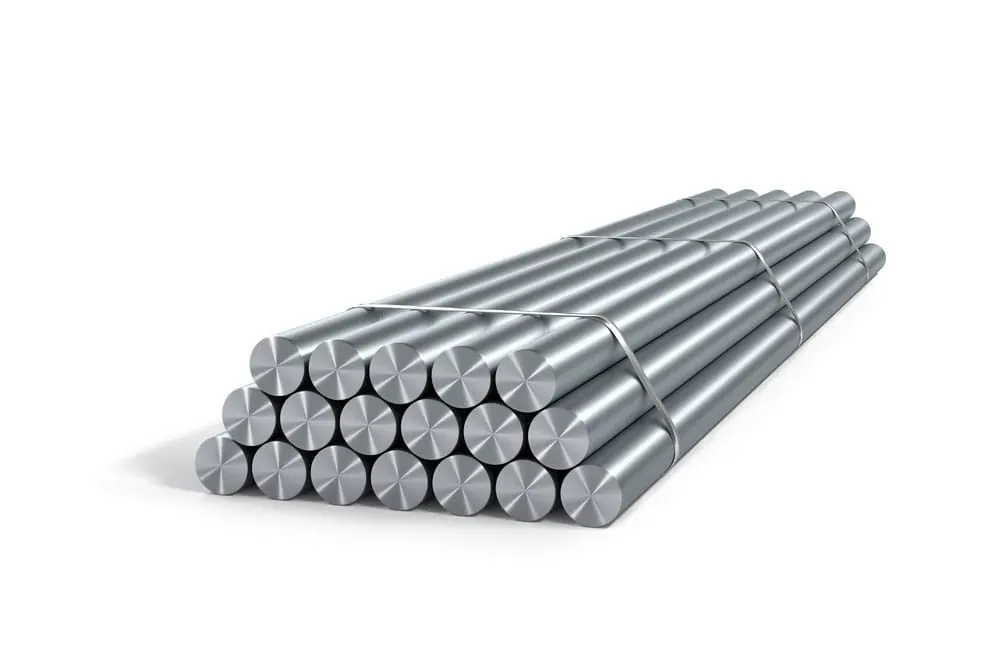
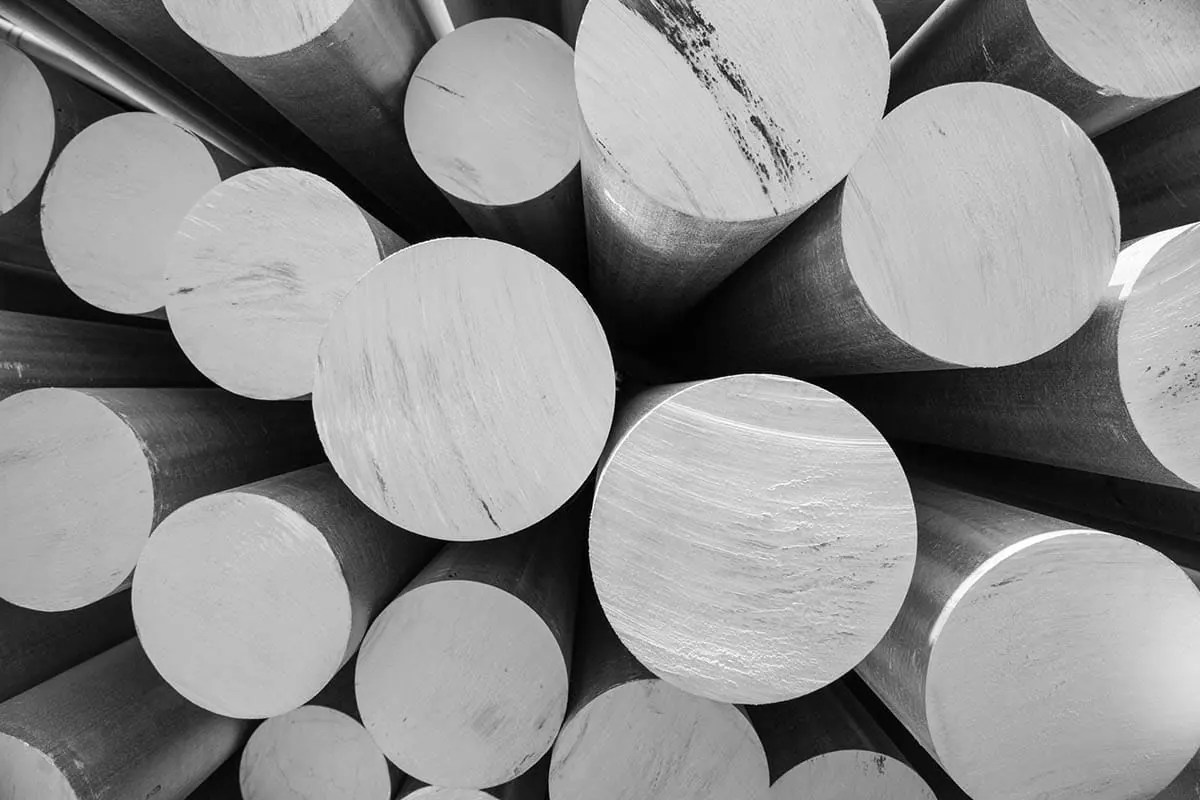
- Billet preparation: Cylindrical aluminum billets are cut to lengths that suit the press.
- Heating: The billet is heated to about 450–500 °C, and the die to a similar temperature.
- Pressing: A hydraulic press pushes the billet through the die; the metal takes the shape of the cross-section and comes out as a long profile.
- Cooling: The profile is cooled in a controlled way with air or water at the press exit.
- Stretching: The cooled profile is pulled from both ends to straighten it and relieve internal stresses.
- Cutting: The profile is cut to the required lengths.
- Ageing: Profiles are held in an oven to reach their final hardness (e.g. T5 or T6).
- Surface treatment: Electrostatic powder coating or anodizing is applied as needed.
Types of Dies
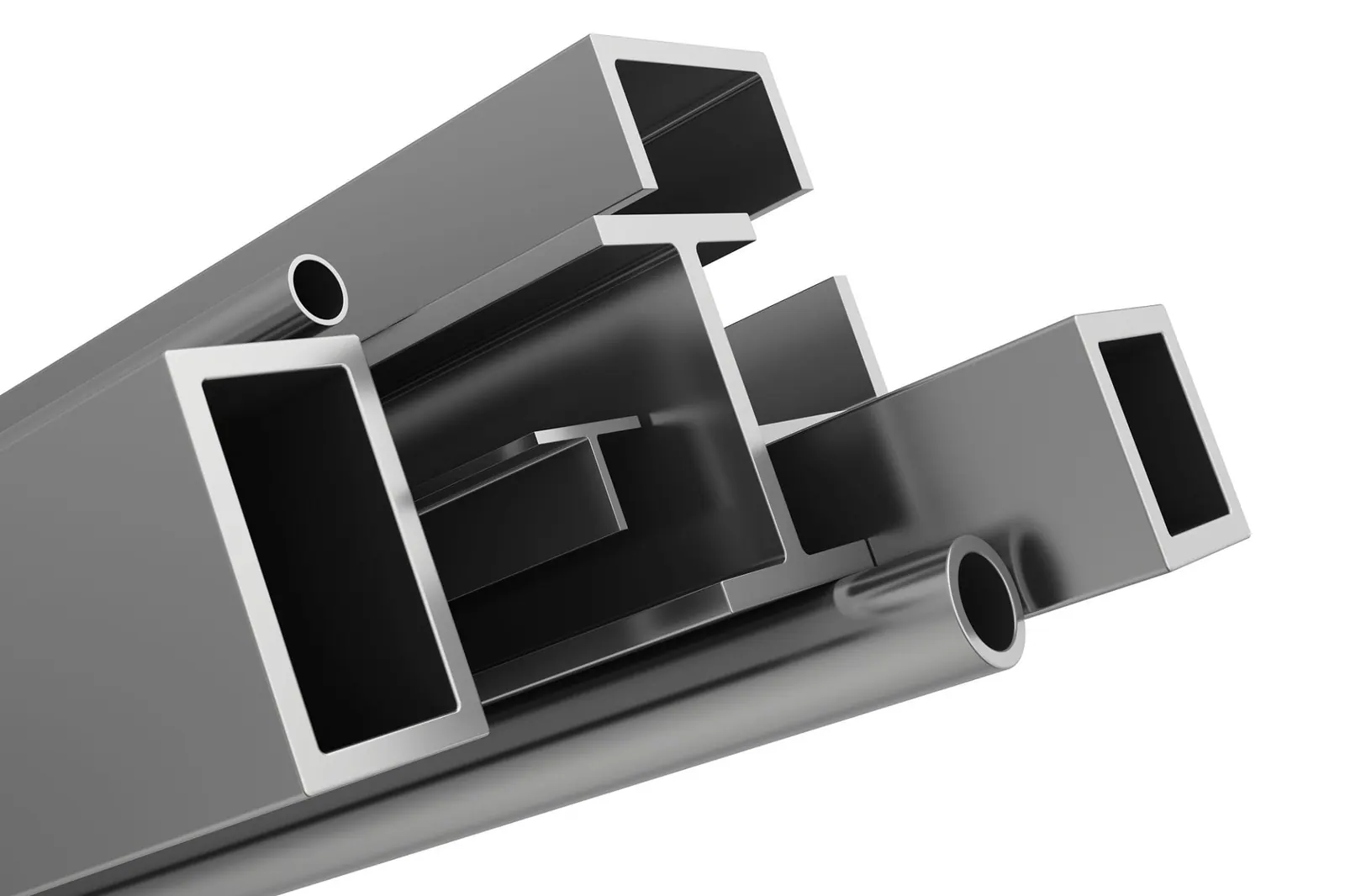
Extrusion dies fall into three groups depending on the section. Solid dies are for sections without enclosed voids, such as flat bars, angles and T profiles. Hollow dies produce closed sections such as boxes and tubes; the metal splits inside the die and welds together again. Semi-hollow dies are used for partly enclosed sections with narrow openings. Die design directly affects the dimensional accuracy and surface quality of the profile. A-Aluminyum’s archive holds more than 22,000 dies.
Alloys Used in Extrusion
The 6xxx series is the most suitable for extrusion. 6060 and 6063 are used for architectural profiles, joinery and decorative applications thanks to their smooth surface and easy pressing. 6005A, 6061 and 6082 offer higher strength and are preferred for structural systems, machine and automotive parts. Alongside the standard series we also produce in 1xxx and 5xxx series and special alloys.
Frequently Asked Questions
What is the difference between direct and indirect extrusion?
In direct extrusion the billet is pushed towards a stationary die, and this is the most common method. In indirect extrusion the die moves towards the billet; with less friction, it is preferred for some difficult alloys.
How long does it take to make an extrusion die?
It depends on the complexity of the section, but designing and making a new die usually takes a few weeks. If a suitable die exists in the archive, production can start right away.
In what lengths are extruded profiles produced?
That depends on the press line and the cooling table. Our plant can produce single-piece profiles up to 9 meters long.